The Compliance Gap in UK Horticulture
In 2024, APHA carried out a review of the top 100 online plant sellers by Google search. More than 20% were not authorised to issue UK plant passports.
These are not businesses operating below the radar. They were visible enough to rank in the top 100 results for plant sales in the UK. They were trading professionally. They were not complying with a legal requirement that has been in force since January 2021.
That finding was published on the APHA Science Blog in January 2025 by Dan Munro, Senior Technical Manager for Plant Passporting at APHA, as context for a new initiative: a voluntary public list of businesses authorised to sell plants by distance contract. The announcement was measured and practical. The number deserved more attention than it received.
The UK plant passport scheme was introduced when the UK left the EU, aligning with a similar EU framework. Any professional operator in England and Wales moving regulated plants to another professional operator within Great Britain, or selling through any form of distance contract, including online sales, mail order, or telephone, must be registered on APHA’s Professional Operator database and authorised to issue plant passports. The passport travels with the plants. It declares compliance with plant health requirements and enables traceability through the supply chain. If a pest or disease outbreak is confirmed, APHA can trace affected plant material back through that chain and contain it before it spreads.
The records requirement is equally specific. Authorised operators must retain details of who supplied them and who they supplied to for a minimum of three years. They must inspect incoming stock for quarantine pests and diseases, and carry out regular inspections of all plants maintained on site. Their authorisation must be renewed annually before the start of the growing season.
None of this is recent legislation. The scheme has been operational for more than four years. Guidance is published on the Defra Plant Health Portal and GOV.UK. And yet more than one in five of the most visible online plant sellers in the UK were operating outside it.
Where the Gap Opens
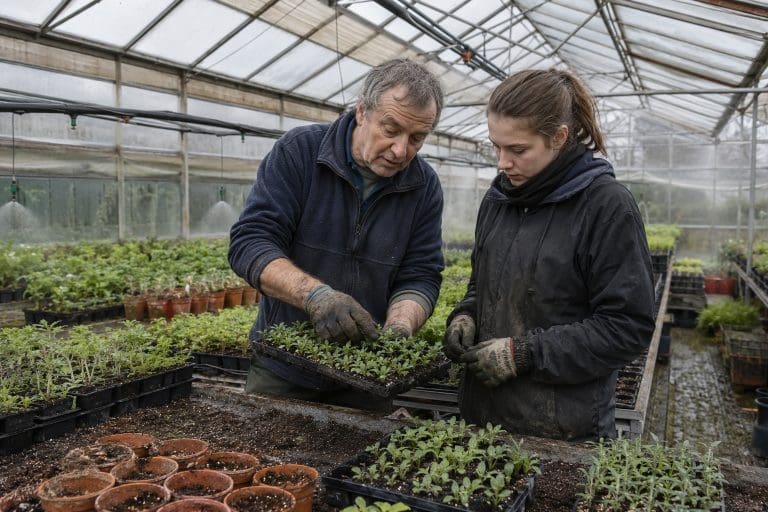
The UK horticultural sector is not dominated by large nurseries with compliance teams. According to the government’s 2022 Horticulture Business Survey, which drew 104 responses from a representative sample of English growers, 44.4% of edible growers and 33.2% of ornamental growers reported an annual turnover under £100,000. Much of the sector is made up of sole traders and small family operations where the same person doing the growing is also managing sales, deliveries, customer enquiries, and increasingly, an online shop.
For those businesses, the practical requirements of plant passporting are not particularly heavy. The records are manageable. The annual inspection is straightforward for a well-maintained site. The passport itself is a label. But first, you have to know you are in scope, and that is where the scheme is losing people.
The definition of a “professional operator” is broader than many small growers expect. It covers anyone involved professionally in the planting, breeding, production, storage, or sale of regulated plant material. Someone selling propagated perennials through an Etsy shop, or running a seasonal plant stall at a farmers’ market, is likely a professional operator under that definition. The distance selling rules compound this. When plants are sold online or by mail order, a plant passport must be issued to the final consumer, even for purchases intended for personal garden use. The exemption that normally removes the passport requirement at the point of private end use does not apply to distance sales.
That combination catches a lot of small operators unprepared. They have heard of plant passporting, in the way most people in and around horticulture have, as something associated with wholesale or nursery trade. They do not necessarily know where their own activity places them relative to the scheme. Some do not know the scheme exists at all.
I see this from where I sit. Running Simplify Gardening for nearly two decades, and building HrowTrack as a record-keeping tool for commercial growers, I talk regularly to people who grow on a small commercial scale. Some have expanded from kitchen garden or allotment projects into something genuinely professional: regular market stalls, seasonal plant fairs, online shops with repeat customers. Very few have any detailed awareness of plant passport obligations. When the subject comes up, the most common response is some version of “I thought that was for nurseries.”
The other response, heard just as often, is blunter: “I’m too busy and not big enough to be worrying about that.”
That second one is the harder problem. The first group does not know they are in scope. The second group has made a decision to set compliance aside and come back to it when the business gets bigger. Which, from a biosecurity standpoint, is exactly when it may be too late.
When people are starting to scale up, they look at pricing, at varieties, at growing systems. The APHA FAQ on plant passporting runs to considerable length and assumes a familiarity with the regulations that most small growers simply do not have yet.
The Distance Selling Problem
Plants support an estimated annual value of £15.7 billion to the UK economy, according to APHA’s own figures. The share of that conducted through distance contracts has grown steadily. The pandemic-era surge in home growing accelerated online plant sales, and that growth has not reversed. Every online plant seller, regardless of scale, is subject to the distance contract rules.
APHA’s 2024 review looked at the most visible operators in that space. Those are the businesses most likely to have had legal advice, to have the volume that makes formal compliance processes worth building, and to have the profile that makes non-compliance a reputational risk as well as a legal one. If more than 20% of that group were outside the scheme, the picture further down the visibility scale is likely to be worse, not better.
Unregulated distance sales already have a documented record of introducing plant pests and diseases into the UK. APHA confirmed this directly in the January 2025 blog post. Xylella fastidiosa, which can devastate olive, lavender, rosemary, and a wide range of ornamental crops, travels in plant material. Phytophthora pathogens have caused serious losses in UK nurseries and woodland. Oak processionary moth arrived through inadequately controlled plant movements. The list of biosecurity threats that have already reached the UK through improperly controlled supply chains is not short, and the consequences extend well beyond the individual business that failed to comply.
The plant passport scheme exists to build a traceable chain that can respond when these threats appear. Businesses operating outside that chain are a gap in that response capability. Most of them are not doing so knowingly. But the gap has persisted for four years.
What Compliance Actually Requires
To become authorised, a grower applies to APHA, demonstrates knowledge of pest biology and prevention, and shows they have systems for inspection and record-keeping. APHA carries out an initial inspection and an annual review covering the plants on site, the records, and the processes in place. For a small nursery or market garden already managing its growing well, this is not a significant additional overhead.
The records requirement, retained for three years, needs to capture who supplied each passported consignment and who received it. A simple spreadsheet covers this. HortTrack was designed partly to address exactly this kind of need, and the growers who use it find that the record-keeping takes minutes, not hours. The barrier is not the task itself. It is knowing the task exists.
The plant passport itself is a label, printed or handwritten, carrying the botanical name of the plant, the country of origin, the operator’s registration number, and a traceability code. For most small operators issuing passports for their own propagated stock, the label is simple, and the information is already known.
None of this is beyond a small horticultural business to manage. Most growers could run a compliant operation without significantly changing how they work. They just need to know what is required of them.
What the Industry Needs to Do
The government’s Plant Biosecurity Strategy for Great Britain 2023 to 2028 sets out a structured national approach. The HTA runs the Plant Healthy certification scheme, which gives businesses a practical framework for demonstrating good biosecurity practice. APHA responded to the 2024 review practically: engaging directly with the non-compliant businesses it found and creating the authorised sellers list. These are the right tools.
But they reach operators who are already oriented toward formal trade channels. HTA members. Businesses with enough profile to appear in a top-100 search review. The sector below that level is not naturally reached by trade association communications or portal guidance.
The gap closes through outreach that meets small growers where they actually are: growing forums, horticultural social media, market garden networks, and the content channels that serve small-scale commercial growers. APHA inspectors should be accessible for advice rather than only for audit. Communications from the CIH, the HTA, and APHA assume no prior knowledge of the scheme, rather than beginning with it.
The 2022 Horticulture Business Survey figure is worth returning to: 44% of edibles growers and 33% of ornamentals growers turning over less than £100,000 a year. Those businesses are the sector’s foundation. If a significant portion of them are operating outside the plant passport scheme, the biosecurity framework that those businesses depend on collectively is weaker than it should be.
APHA’s 2024 review found more than 20% of the top 100 non-compliant and responded by creating the voluntary public list of authorised distance sellers. How many more businesses sit below the search visibility that the review reached is a question the current data does not answer.
Sources: APHA Science Blog (Dan Munro, January 2025): How APHA is protecting online plant buyers. Defra: Plant Passport FAQ. Defra: Horticulture Business Survey 2022. APHA: Plant Biosecurity Strategy for Great Britain 2023 to 2028.