Crop Rotation Explained Simply
Crop rotation sounds more complicated than it is. Once you understand the principle and the four groups involved, it becomes a straightforward annual planning exercise that pays dividends in plant health and soil quality.
Why it matters
When you grow the same family of vegetables in the same piece of ground year after year, two problems build up. First, the pests and diseases specific to that plant family accumulate in the soil. Second, the specific nutrients that the plant family depletes get progressively exhausted.
Moving crops to different areas breaks these cycles. Pests that overwinter in soil, expecting to find brassicas next spring, find beans instead. Soil depleted of nitrogen by heavy feeders is replenished by the legumes that follow them.
The four groups

Group 1: Brassicas
Cabbage, broccoli, cauliflower, Brussels sprouts, kale, kohlrabi, turnips, swede, radishes. Prone to clubroot disease, which persists in the soil for many years. Never grow brassicas in the same ground in consecutive years.
Group 2: Legumes
Peas and beans. Fix atmospheric nitrogen into the soil through root nodules. Leave the roots in the ground after harvest to release this nitrogen for the following crop.
Group 3: Roots and alliums
Carrots, parsnips, beetroot, onions, garlic, and leeks. Do not add fresh manure to root vegetable beds as it causes forking and distortion. These crops prefer a lower-fertility soil than brassicas.
Group 4: Potatoes and tomatoes
Both are in the Solanaceae family and share diseases, including blight. Keep them together in the rotation and never follow one with the other.
A simple four-bed rotation
If you have four growing areas, assign one to each group. Each year, each group moves one position around the rotation. After four years, every group has been in every position, and the cycle begins again.
With fewer beds, a simplified two or three-year rotation still provides meaningful benefit. Even alternating heavy feeders and light feeders in the same space reduces the buildup of specific problems.
Tracking rotation across seasons
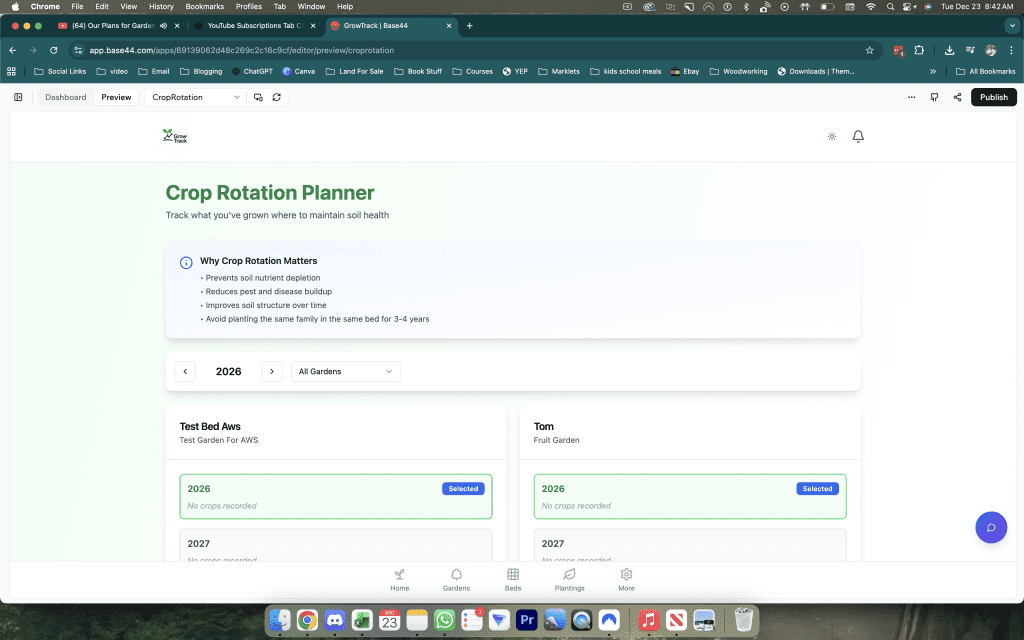
The challenge with rotation is remembering where everything was in previous years. A garden journal or dedicated tracking tool prevents this from becoming guesswork. GrowTrack records what was grown in each bed each season, making rotation planning in subsequent years straightforward.
Tony O’Neill is a vegetable-growing expert at Simplify Gardening.