How to Identify and Deal with Common Garden Pests
Pest damage is one of the most demoralising things in a vegetable garden. You do the work, the plants establish well, and then something eats them. Understanding what is causing the damage is the first step. Acting proportionately is the second.
Identify before you act
Different pests cause different types of damage. Treating for slugs when the problem is actually caterpillars, or applying pesticide when the culprit is a nutrient deficiency, wastes time and effort, and can make things worse.
Before reaching for any solution, spend a moment with the plant and the soil around it. Look at the pattern of damage, the time of day, and what evidence is present.
Slugs and snails
The most common cause of seedling and young plant damage in the UK. Signs include irregular holes in leaves, a slime trail, and damage that appears overnight or after rain.
Control methods in order of effectiveness: copper tape around pots and raised bed edges, beer traps sunk into the soil, nematodes (biological control, effective in warm, moist conditions), and slug pellets as a last resort. Avoid blue pellets containing metaldehyde, which are harmful to wildlife.
Aphids
Clusters of small soft-bodied insects on new growth, undersides of leaves, and around growing tips. They suck sap and can transmit viruses. Plants respond with distorted, curled, or yellowing leaves.
A strong jet of water knocks them off. Ladybirds, lacewings, and hoverflies are their natural predators. Encouraging these into the garden through flowering plants is a long-term solution. Insecticidal soap spray is effective for heavy infestations without harming most beneficial insects.
Caterpillars
On brassicas, the large white butterfly caterpillar is the main culprit. They eat large, irregular holes in leaves and progress quickly. Check the undersides of leaves for clusters of yellow eggs and remove them.
The most effective control is exclusion: covering brassicas with fine insect mesh keeps the butterflies off before they can lay eggs. Once caterpillars are established, pick them off by hand or use a biological control product containing Bacillus thuringiensis.
Vine weevil
The larvae of the vine weevil eat plant roots, causing sudden plant collapse despite apparently healthy-looking foliage. Adults notch leaf edges but do less damage. Most commonly a problem in containers.
Nematodes watered into the compost in late summer to autumn are effective. Replace compost in affected containers and inspect the roots of wilting plants for the curved white larvae.
Carrot root fly
The larvae tunnel into carrot roots, creating the rusty brown scarring characteristic of carrot root fly damage. The scent of crushed carrot foliage attracts the adult flies and lay eggs near the base of plants.
Covering with fine mesh from sowing time prevents egg-laying. Growing in raised beds or containers at a height of 60 centimetres or above takes plants above the flight path of the low-flying females.
Keeping pest records

Pest problems often follow patterns. The same pest tends to affect the same crops in the same beds year after year if conditions favour them. Tracking where you have had problems, when they occurred, and what worked lets you take preventive action rather than always reacting.
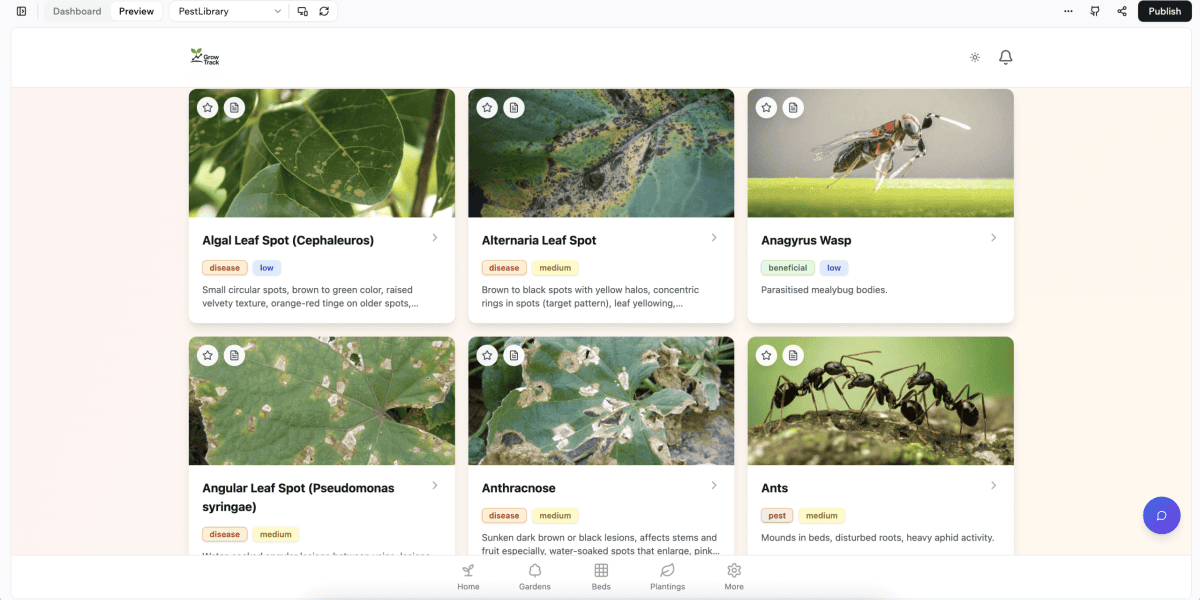
GrowTrack includes pest and disease tracking alongside planting records, so patterns become visible over time.
Tony O’Neill is a vegetable growing expert at Simplify Gardening and founder of GrowTrack Systems Ltd.
