
How to Start Composting and Why It Changes Everything
Composting is the one thing that makes the biggest difference to a vegetable garden, and the one thing most growers put off because it sounds complicated. It is not complicated. It is managed decomposition, and nature does most of the work.
Once you understand the basic principles, you will wonder why you ever sent garden waste to the bin.
What composting actually does
Finished compost improves soil structure, feeds soil biology, suppresses certain diseases, and slowly releases nutrients in a form plants can use. Unlike manufactured fertiliser, it does all of these things at once. A soil regularly amended with compost becomes progressively better at supporting plant life, more resistant to drought, and easier to work.
It is the foundation of everything covered in Composting Masterclass and the single most sustainable thing a home grower can do.

The carbon-to-nitrogen ratio
Composting works because microorganisms break down organic matter. Those organisms need both carbon-rich materials to provide energy and nitrogen-rich materials to build protein. The ratio of these two things determines how quickly your heap breaks down and whether it smells.
Carbon-rich materials (browns) include:
- Dry leaves and straw
- Cardboard and paper
- Wood chip and sawdust
- Dry plant stems
Nitrogen-rich materials (greens) include:
- Fresh grass clippings
- Vegetable and fruit scraps
- Fresh plant material and weeds (without seed heads)
- Coffee grounds and tea leaves
A rough target ratio is three parts browns to one part greens by volume. A heap that is too green will become slimy and smell. A heap that is too brown will be dry and break down very slowly. Adjust as you go.
How to build your heap

You do not need an expensive bin. A simple bay made from pallets works well. Two bays are better because one can be actively building while the other is maturing. A minimum volume of one cubic metre (roughly one metre in each direction) is needed to generate enough heat for faster decomposition.
Build in layers if you can, alternating greens and browns. Keep it moist but not wet. If you squeeze a handful and no water drips out, it needs more moisture. If water pours out, it is too wet and needs more browns.
Turn the heap every few weeks to introduce oxygen and speed up the process. A well-managed hot heap can produce finished compost in two to three months. A slower cold heap left largely undisturbed will take six to twelve months but requires almost no effort.
What not to compost
Leave out meat, fish, cooked food, and dairy. These attract vermin. Avoid perennial weed roots like bindweed and couch grass unless your heap gets hot enough to kill them. Leave out diseased plant material to avoid spreading problems through your compost.
When is it ready
Finished compost is dark brown, crumbly, and smells of earth. You should not be able to identify the original materials. If you can still see distinct pieces of kitchen scraps or leaves, it needs more time.
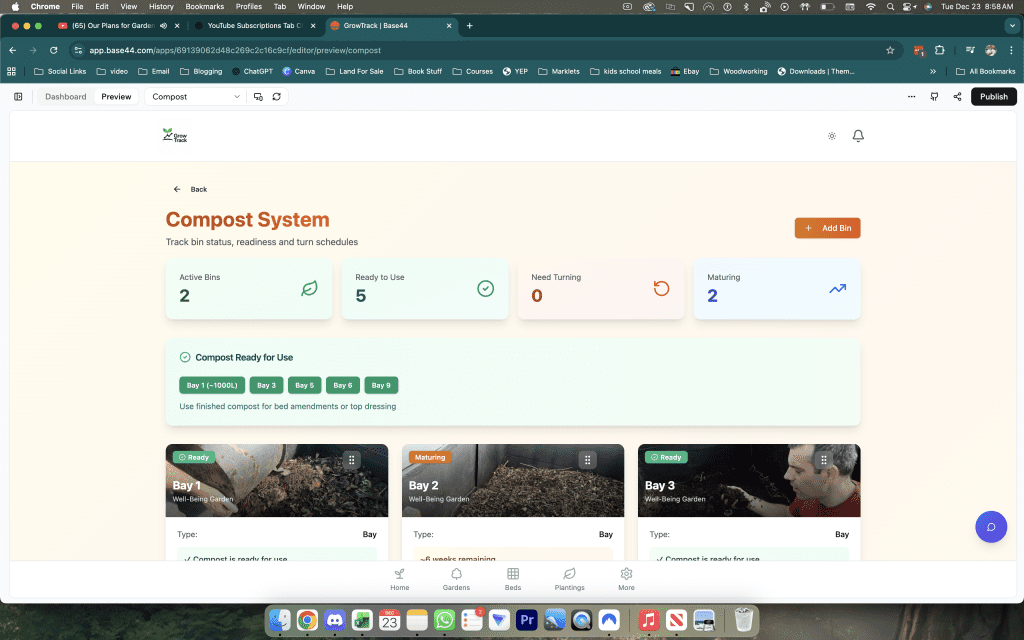
Apply finished compost to beds at the start of the season or use it as a mulch around established plants. The improvement to your soil will be visible within a season.
Tony O’Neill is a vegetable-growing expert and author of Composting Masterclass. Find practical growing advice at Simplify Gardening.
